This was first sent as a newsletter to hundreds of subscribers. Occasionally, I will send content, thoughts and ideas direct to your inbox. To join them, sign up at the bottom of this page.
People are wrong about most things, most of the time.
Over the last ten years, the polling company Ipsos has been examining the gap between how people perceive the world and what is actually happening.
Their Perils of Perception study carried out more than 200,000 interviews across 40 countries. It is an epic portrait of misunderstanding and misconception.
We overestimate immigration figures. We assume there is much more violent crime than there actually is. We think we are less at risk of cancer than we actually are.
These misconceptions warp our view of the world, what is and isn’t important, how we should think, feel and vote. They create fertile ground for malign actors, and could erode our faith in democracy.
This is something I have become a bit obsessed with. It runs through a lot of my stories. I explored it during my time with the controversial YouTuber Charlie Veitch, where I found a man selling an unrecognisable and dystopian vision of my home city. I spoke to the sociologist William Davies about his experiment on TikTok which showed the same thing. I noticed it during my time in Makerfield for Andy Burnham’s by-election, where the gap between how people felt and the reality of their lives seemed enormous. The world that voters were being sold on Facebook bore little resemblance to the facts on the ground. After a mild confrontation with Restore Britain leader Rupert Lowe, and a not-so-mild trolling from his supporters, I investigated why that disconnect seemed so stark, and how Lowe was benefiting.
At the heart of most of these stories is a lucrative industry of content creation that is either selling us a dystopian view of the world, or subtly making us feel bad about ourselves, or gently nudging us to assume the worst of each other.
But there is something else these stories have in common: they are about characters at the fringes. They are stories playing out on YouTube, or Facebook, or TikTok. It’s where a lot of us get our news. Misconceptions grow from these platforms and into the real world. They influence the wider information ecosystem. But do they explain the scale of how wrong we are about things?
The Perils of Perception report seems to suggest we really are very wrong about a lot of things. Not just the topics you find in the cauldron of misinformation – like immigration figures that fuel bigotry or crime stats that fuel fear. We’re wrong about how many people are overweight (we think 44%, it’s actually 62%), we massively overestimate the number of atheists and agnostics (we think 45%, it’s actually 25%), and underestimate how many of us live in urban areas (we think 30% of people live in rural Britain, it’s actually 18%). In America, people were asked what percentage of teenage girls aged 15-19 give birth to a child each year. They said 24%. It’s just 3%.
So… what else are we getting wrong, and why?
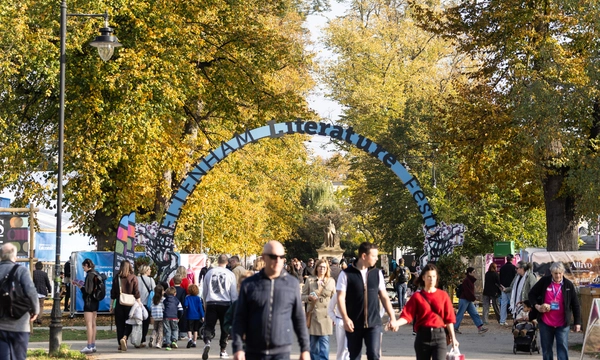
In a couple of weeks, I will stress-test my theory of wrongness with an expert, in front of a live audience. I will be hosting an event with The Times’ brilliant data editor Tom Calver – The News in Numbers – at the Cheltenham Literature Festival.
That’s right: this whole thing has been a sales pitch. I’m sorry about that. But I really do think this will be great. Tom is so smart. He has an impeccable eye for the detail in data. He can help us separate truth from fiction on pretty much anything.
So if you can make it to the Cheltenham Literature Festival at 10.30am on Tuesday 13 October, come on by. You can get tickets here. It would be lovely to see you, and tell you how wrong you are.