A few years ago I made a documentary about a man who claims to be God… and the people who follow him. But there was one story we didn’t quite get time to tell.
If you are hearing about this for the first time, I know what you’re thinking: that sounds a bit like a cult.
That is something I challenge them on in the programme we made for BBC Radio 4, and once you’ve finished reading this, I’d highly recommend you listen to the whole episode to hear how they answer that accusation.
I spent years with James – who believes he is God – and the people who build their lives around him. But there was one story we didn’t get time to include – and that was Margaret’s story.
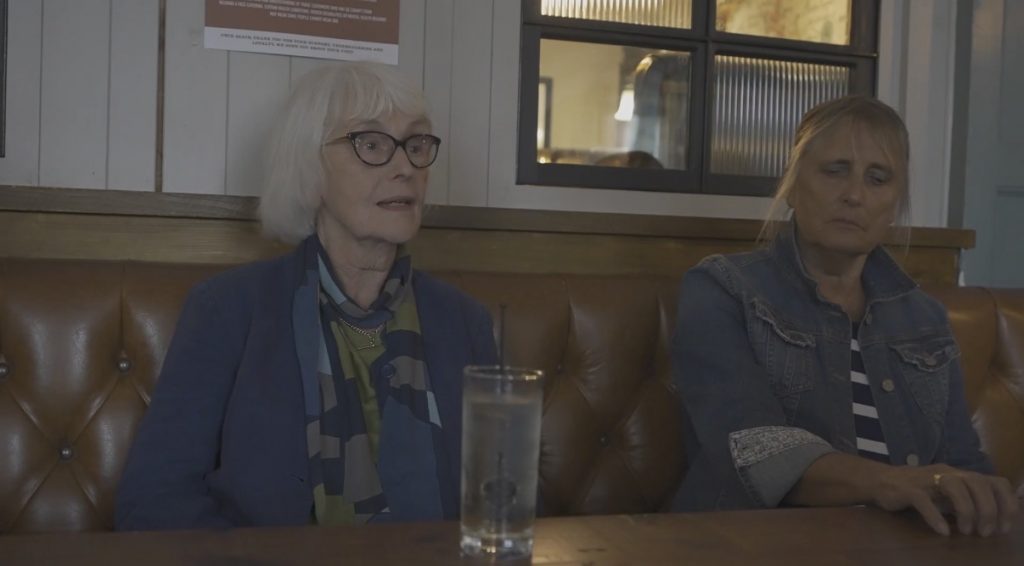
Margaret lived quite far away and would travel for hours, sometimes a couple of times a week, to be with James and the group. I always thought this was a particularly striking commitment. One afternoon, out for lunch at The Angel Pub in Cheshire where James first presented himself as God, Margaret said: “I am always aware of who he is, and that there is that step that you don’t tread over…” It was an admission of a possible imbalance of power. The Cult Awareness Society says that whenever somebody presents themselves as God, or God’s representative, that creates an immediate imbalance of power. I had been alert to it, but couldn’t find an explicit example of it in all my time with the group.
A few weeks ago, I appeared on a podcast with Fr Alex Frost, the vicar of St Matthew the Apostle in Burnley, Lancashire. He told me groups like this worried him. I asked him, as politely as I could, how this was different to his own work. Isn’t he God’s representative? Isn’t there a possible imbalance of power between him and those in his congregation who are led by him. The difference, he said, was the structures and safeguarding that organised religions have. Still, he said, it is always possible.
Some of the most egregious examples of abuse have been uncovered in churches in recent years. Last year, when Pope Francis died, I spoke to Juan Carlos Cruz. He had been the victim of sexual abuse at the hands of a Catholic clergyman in his native Chile. When Pope Francis visited Chile, he was dismissive of Juan’s claims, and of the issue generally. Later, he would change his mind, and took Juan on as an advisor. The two became close friends. Throughout everything, Juan never lost faith. He remained a Catholic, a member of the Catholic Church, and committed to God. His faith was never in the institution of the Catholic Church, he told me, his faith was in God. He was able to strip the clergyman and, for a time, the Pope of their power over him. He didn’t have to believe in them to believe in God.
Back in Cheshire, Margaret had another revelation I couldn’t shake off. She told me that her husband had been a vicar himself. God’s representative. And that he DIDN’T BELIEVE JAMES WAS GOD.
That stopped me in my tracks. How could two people share a life together and yet believe something so radically different? How does that work? He waves her goodbye of an evening as she sets off on her long drive to spend time with a man she believes is God, he doesn’t?
It seemed impossibly odd… until I realised how completely normal it was.
My Grandad is my best friend. He was my father figure growing up, and still is. He basically shaped who I am. We go to the football together every Saturday afternoon and then, every Sunday morning, he goes to church and prays to a God that I don’t believe in. Not only is that ok – it’s lovely. I understand why he believes it and he understands why I don’t. And then we just… get on with our lives.
Between Margaret and her husband and Juan and the Pope and me and my Grandad. We are multifaceted humans with so much more in common – a whole world and life in common – beyond that thing that we disagree on.